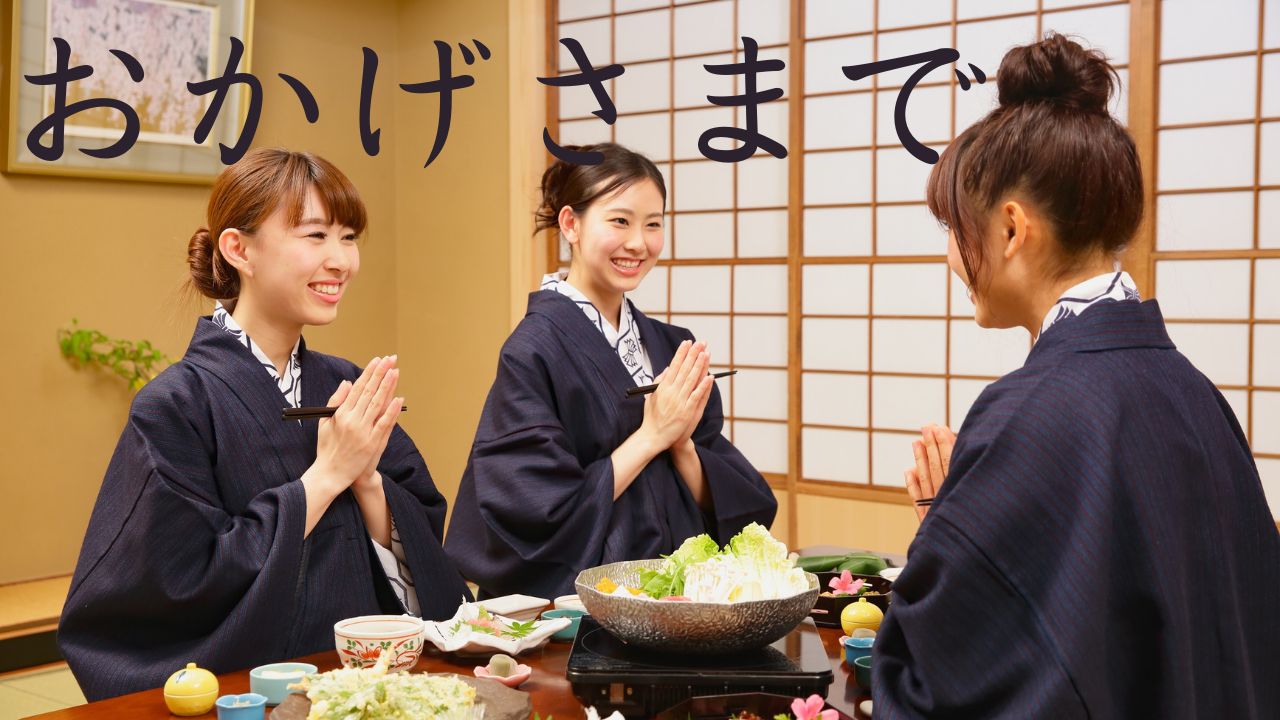
「おかげさまで」という日本人の心
日本語の「ありがとう」という言葉は、世界でもよく知られています。
けれども、日本人が「ありがとう」と言うとき、その言葉の中にはもうひとつ大切な言葉が隠れていることに気付いているでしょうか。
それが「おかげさまで」です。
「おかげさまで元気です」「おかげさまで無事に終わりました」
私たちは日常的にこの言葉を使います。
直訳すると “Thanks to you” ですが、実はもっと広く、深い意味を含んでいます。
“Okagesama” means ‘thanks to someone or something beyond myself.’
ここでいう「かげ」は、もともと「姿は見えないけれど、そこにあるもの」「見えない力」を表していました。
つまり「おかげさま」とは、「目に見えない存在のおかげ」「誰かの支えのおかげ」「自然や神仏のおかげで今の私がある」といった謙虚な気持ちを表しているのです。
日本人は昔から、自然や神仏、人との関係の中で「生かされている」という感覚を大切にしてきました。
朝日が昇り、雨が降り、米が実り、家族が健康で過ごせる。
そんな「当たり前」に思える日常も、実は多くの支えがあって初めて成り立つ奇跡です。
だからこそ「おかげさまで今日も元気です」と言うとき、そこには挨拶以上の意味が込められています。
私たちが口にする「ありがとうございます」は相手への感謝だけでなく、目に見えない多くのものへの感謝も同時に込められているのです。
“Okagesama” can mean ‘I am well, thanks to you, the world, and even unseen forces.’
海外でも感謝を表す言葉はたくさんあります。
英語の “Thank you” や “I appreciate it” はシンプルで、相手に対する気持ちを直接表します。
しかし、「おかげさま」は相手だけではなく、自分の存在を支えるあらゆるモノに思いを巡らせる言葉です。
たとえば、海外の人に説明するときはこう言えます。
“In Japanese culture, we say ‘Okagesama’ to express that our well-being depends on others, nature, and invisible support.”
この「見えないつながり」に意識を向ける感覚は、日本独特かもしれません。
西洋の文化では「自分の力で成し遂げる」ことが強調されますが、日本では「自分一人ではない」という考え方が深く根づいています。
「おかげさま」は特別な時だけでなく、日常のあらゆる場面で使われます。
病気が治ったときに「おかげさまで元気になりました」と言い、仕事が無事終わったときに「おかげさまで成功しました」などと言いますね。
そのたびに、私たちは自分一人の力ではなく、周りの協力や環境のおかげで今があることを再確認します。
“Okagesama reminds us that we are not alone — we live supported by many connections.”この言葉を使うことで、日本人は無意識に自分を取り巻く世界に感謝し、謙虚な心を保っています。
忙しい現代社会では、自分の力だけで生きているように錯覚しがちです。
しかし、「おかげさま」という言葉を思い出すことで、私たちは立ち止まり、周囲への感謝を取り戻すことができます。
自然災害の多い日本では、今日を無事に過ごせることがどれほどありがたいかを、昔から実感してきました。
“Even being alive today is something we can say ‘Okagesama’ for.”
こうした心持ちは、海外から見るととてもスピリチュアルに見えるかもしれません。
けれども、日本人にとってはそれが日常。
目に見えないつながりを意識し、感謝を言葉にすることで、心を落ち着け、周囲との関係を和やかに保つことができます。
近年、マインドフルネスや感謝の習慣が世界的に注目されています。
日本人が昔から大切にしてきた「おかげさま」の心は、まさにその実践です。
感謝の気持ちを日常に取り入れることで、私たちはもっと穏やかに、幸せに暮らせるかもしれません。
“Okagesama is not just a phrase — it is a way of living with gratitude.”
この記事では、日本語ならではの「おかげさま」の深い意味と、その背景にある日本人の精神性を紹介しました。
海外の人に説明するときは、単に “Thanks to you” ではなく、「私の幸せや健康は、周囲の人や環境、そして目に見えない存在に支えられている」という日本人の世界観を伝えると、とても興味を持ってもらえるのではないかと思います。
“Okagesama” – The Heart of Japanese Gratitude
Most people around the world know the Japanese word arigatou — “thank you.”
But did you know that when Japanese people say arigatou, there is often another, deeper word hidden behind it?
That word is okagesama.
You may often hear people in Japan say:
“Okagesama de genki desu.” (“I am well, thanks to you.”)
“Okagesama de buji ni owarimashita.” (“It ended safely, thanks to you.”)
Literally, okagesama can be translated as “thanks to you,” but its meaning goes much further.
Okagesama means, “I am well thanks to someone — or something — beyond myself.”
The word kage originally meant something invisible but present, like a shadow or unseen power.
So okagesama expresses a humble awareness that our current well-being exists not only because of our own efforts, but also thanks to other people, nature, and even unseen forces.
A Worldview Rooted in Connection
For centuries, Japanese people have felt that life is something we are given, not just something we create.
The sun rises, the rain falls, rice grows, our families stay healthy — all these “ordinary” moments are in fact small miracles.
When we say “Okagesama de,” we are quietly acknowledging all those connections that allow us to be here, alive and well.
In this way, even the common phrase arigatou gozaimasu carries not just gratitude toward the person in front of us, but also toward the many invisible supports that sustain our lives.
Beyond “Thank You”
English has many ways to express gratitude: thank you, I appreciate it, thanks a lot.
These phrases focus on the person you are speaking to.
But okagesama goes beyond that — it invites you to remember that your life is supported by countless others, even those you cannot see.
You might explain it this way to someone overseas:
“In Japanese culture, we say okagesama to express that our well-being depends not just on ourselves, but on others, nature, and unseen support.”
This way of thinking — that “I am not alone” — is deeply rooted in Japanese culture.
Where Western culture often celebrates the individual achievement of “I did it myself,” okagesama reminds us that we live in a web of interdependence.
Gratitude in Everyday Life
Okagesama is not reserved for special occasions.
We say it when recovering from an illness, when finishing a big project, or even just when someone asks how we are doing.
Each time, we are reminded that our health and success are not ours alone.
In this sense, okagesama is almost like a daily mindfulness practice.
It keeps us humble and connected to the world around us.
A Gentle Pause in a Busy World
Modern life can make us feel as if everything depends on our own efforts.
But remembering okagesama gives us a moment to pause — to feel grateful for our surroundings, the people who help us, and the simple fact that we are alive.
In a country like Japan, where natural disasters are common, this awareness runs deep:
“Even being alive today is something we can say okagesama for.”
What might seem “spiritual” to outsiders is simply part of daily life in Japan.
By acknowledging these unseen connections, we calm our hearts and keep harmony in our relationships.
A Timeless Practice of Gratitude
Today, the world is embracing practices like mindfulness and gratitude journaling.
In a way, Japan has been doing this for centuries through the spirit of okagesama.
“Okagesama is not just a phrase — it is a way of living with gratitude.”
When you share this idea with others, don’t just translate okagesama as “thanks to you.”
Explain that it reflects a worldview — that our happiness and health are made possible by many visible and invisible supports.
Most people will find this perspective both refreshing and inspiring.


コメント