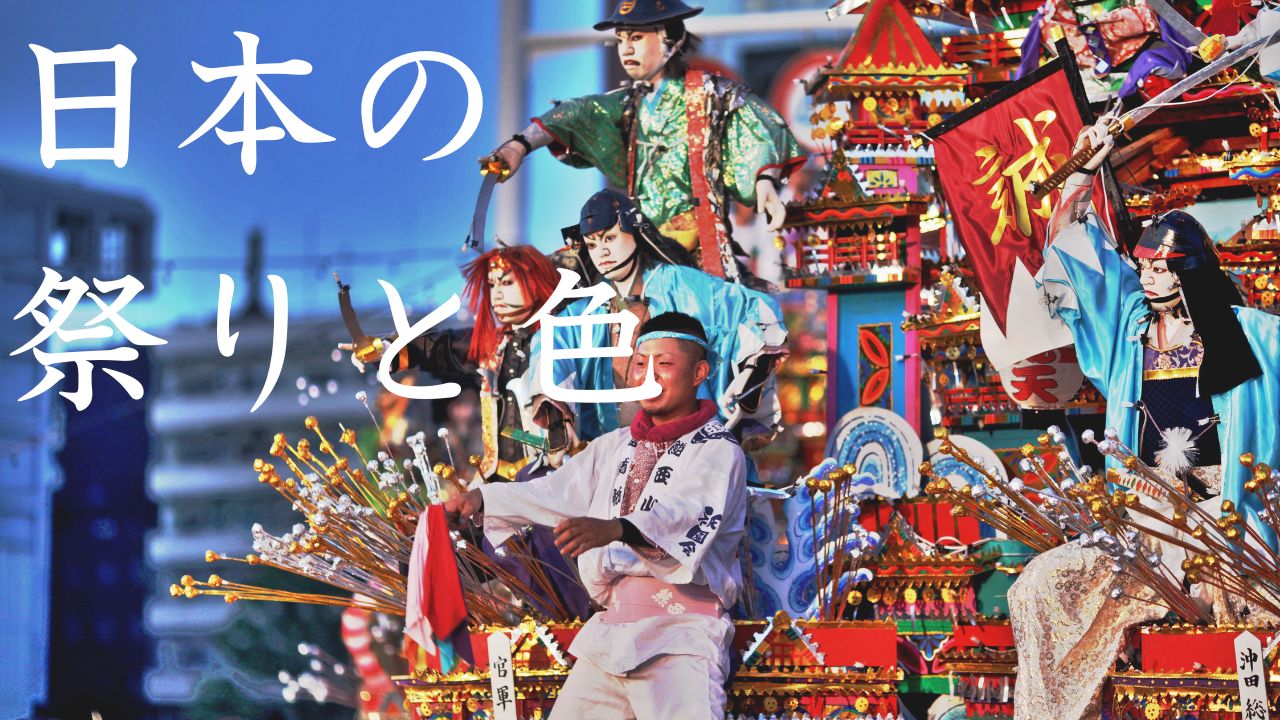
日本人の色彩感覚といえば、一般的には「控えめで落ち着いた色」を思い浮かべる人が多いのではないでしょうか?
茶道に使われる茶器の渋い色合い、古い木造建築の褪せた色、着物に使われる藍色や灰色。日本人は昔から、鮮やかさよりも柔らかく調和のとれた色を好んできたとよく言われます。
でも、どうでしょう?日本の「祭り」に使われる色彩はとても鮮やかです。
提灯の真っ赤な光、山車を飾る金色や紫、神輿を担ぐ人々の白い法被と黒い帯、そして浴衣の花柄。日常に溶け込んでいる静かな色合いとは対照的に、お祭りの場での色は大胆で、とても華やかですね。
“In Japanese festivals, colors are bright and powerful, very different from everyday life.”
日常と非日常を分ける「色」
日本のお祭りでの色彩は、単なる装飾ではありません。それは「日常」と「非日常」を区別するためのサインでもあります。
普段の生活は、自然の色や控えめなトーンに寄り添ってきた日本人。そこに赤や金、鮮やかな青が加わることで、「今は特別な時」「神さまを迎える時」という空気が一瞬で生まれます。例えば、お祭りに欠かせない「赤」は、魔除けや生命力を象徴する色。神社の鳥居や御神輿の飾りに使われるのは、この赤が「神聖な境界」を示しています。
“The color red in Japanese festivals means energy and protection from evil.”
祭りの色と人々の心
日本人は昔から「ハレとケ」という考え方を持ってきました。
「ケ」は普段の生活、「ハレ」は特別な日やお祝いの日。お祭りはまさに「ハレ」の時間であり、そこに鮮やかな色彩が欠かせなかったのです。
金色に輝く山車や太鼓の装飾は、太陽の光を受けて輝いて、神さまをお迎えするのにふさわしい場を作り出します。紫は高貴さを表し、青や緑は豊穣や自然の恵みを象徴します。こうした色が人々の心を高揚させ、神さまと人間、そこに集まる地域のひとたちとの共同体の一体感を生み出していきました。
“In Japanese culture, colors in festivals make people feel unity and joy.”
海外との比較 ― 色で表す祭りの違い
では、日本の祭りと海外の祭りを比べると、どんな違いがあるのでしょうか。
たとえばヨーロッパのカーニバルや南米のリオのカーニバル。そこでも色鮮やかな衣装や装飾が見られますが、その多くは「個人の表現」「自由な装い」が強調されます。羽根飾りやスパンコールなど、きらびやかで個人を目立たせる色使いです。
一方、日本のお祭りでは「共同体の色」が重視されます。法被や浴衣を揃えたり、同じ模様をまとったりすることで「みんなで一つになる」感覚が生まれます。色は派手でありながらも、個を主張するためではなく、むしろ「調和」をつくるために使われているのです。
“In Western festivals, colors show individuality. In Japanese festivals, colors show harmony.”
多くの日本人にとって、お祭りは子どもの頃の記憶と結びついています。夏の夜に浴衣を着て、赤い金魚すくいの水面を覗き込んだこと。カラフルな綿あめや、光るおもちゃを手にしたこと。
そうした思い出には、必ず「色」があります。普段は見られない鮮やかな世界に包まれて、ワクワク楽しかった体験が、日本人の色彩感覚を豊かにしてきたのかもしれません。
“Japanese people remember festivals with colors: red lanterns, gold floats, and colorful yukata.”
現代の日本でも、祭りの色彩はたくさんの人たちの目を楽しませてくれます。京都の祇園祭の山鉾、青森のねぶた祭の光の迫力、浅草の三社祭の勇ましい神輿。それぞれの地域が守ってきた伝統の色には、土地の自然や歴史、信仰が映し出されています。
さらに、最近では外国人観光客もお祭りに参加し、その色彩の鮮やかさに感動する人たちが増えています。インスタグラムなどのSNSでも、赤提灯や金色の神輿は「日本らしさ」を象徴するビジュアルとして世界に発信されています。
日本のお祭りの色彩は、ただ華やかで楽しいだけではありません。
それは、普段の生活とは違う「非日常」を演出し、人々を一つにまとめ、自然や神々への祈りを込めるための大切な役割を果たしています。
日常では落ち着いた色を愛し、非日常では鮮やかな色を解き放つ。そこに、日本人の独特な色彩感覚と文化が息づいているのです。またそうしたメリハリをつけることで、私たち日本人は無意識ながら神さまへの感謝の気持ちを表現しているのかもしれません。
“Festival colors in Japan show the spirit of unity, respect for nature, and joy of life.”
The Vibrant Colors of Japanese Festivals: Harmony, Tradition, and the Spirit of Celebration
When we think about Japanese aesthetics, many people imagine calm and muted tones — the subdued colors of tea ceremony utensils, the weathered wood of old temples, or the soft indigo and gray of traditional kimono.
Japanese people have long been said to prefer harmony and subtlety over loud and flashy colors.
But festivals in Japan tell a completely different story.
Colors that Separate the Ordinary and the Extraordinary
In Japanese festivals, colors are bold and full of life — a striking contrast to everyday scenery.
Bright red lanterns light up the night, gold and purple decorations adorn the festival floats, participants wear white coats with black sashes, and yukata bloom with colorful flower patterns.
“In Japanese festivals, colors are bright and powerful, very different from everyday life.”
These colors do more than just decorate. They signal a shift from “ke” (the ordinary) to “hare”(the extraordinary).
For centuries, Japanese daily life has been close to nature, surrounded by earthy and muted tones.
When red, gold, and vivid blue appear, they announce: “This is a special moment. This is when we welcome the divine.”
For example, red — seen on shrine gates and portable shrines — is a sacred color representing protection and vitality.
“The color red in Japanese festivals means energy and protection from evil.”
The Meaning of Festival Colors
Japanese culture has a concept of “hare*”(festive occasions) and “ke” (everyday life).
Festivals are the time of “hare”, and vibrant colors have always been essential to mark this shift.
Golden floats and drums shine under the sun, creating a sacred and joyous atmosphere. Purple represents nobility, while blue and green symbolize abundance and nature’s blessings.
These colors lift people’s spirits and foster a sense of unity — between humans, the gods, and the local community. “In Japanese culture, colors in festivals make people feel unity and joy.”
Festival in Japan and Overseas.
In Europe or South America, carnival celebrations are also full of vivid colors — but they often focus on individual expression. Feathers, sequins, and extravagant costumes are meant to make the wearer stand out.
In Japan, however, festival colors emphasize “community harmony”. Matching coats, coordinated yukata patterns, and group processions create the feeling of “we are one.”
Even though the colors are bold, they are not about personal display — they are about shared experience and unity.
“In Western festivals, colors show individuality. In Japanese festivals, colors show harmony.”
Childhood Memories and the Colors of Joy
For many Japanese people, festival colors are tied to childhood memories: wearing a yukata on a summer night, watching the red glow of lanterns, scooping goldfish from a shimmering pool, and holding a rainbow-colored cotton candy.
“Japanese people remember festivals with colors: red lanterns, gold floats, and colorful yukata. These colorful experiences are more than entertainment — they shape Japanese sensitivity to beauty and deepen their appreciation for color.
Festival Colors Today
Even today, the colors of Japanese festivals fascinate both locals and visitors.
Kyoto’s Gion Festival with its grand floats, Aomori’s Nebuta Festival with its glowing lantern warriors, and Tokyo’s Sanja Festival with its powerful portable shrines — each reflects the history, faith, and nature of its region.
Tourists from around the world now join these celebrations, often sharing photos of red lanterns and golden shrines on Instagram as symbols of *authentic Japan.*
More Than Just Decoration
The colors of Japanese festivals are not only visually stunning.
They mark the transition from ordinary life to the extraordinary, bring people together, and express gratitude to nature and the divine.
In everyday life, Japanese people embrace soft, natural colors — but when the festival begins, they unleash a world of brightness and joy.
This contrast reflects a uniquely Japanese way of seeing the world, where color is used to honor the gods and celebrate life itself.
“Festival colors in Japan show the spirit of unity, respect for nature, and joy of life.”


コメント