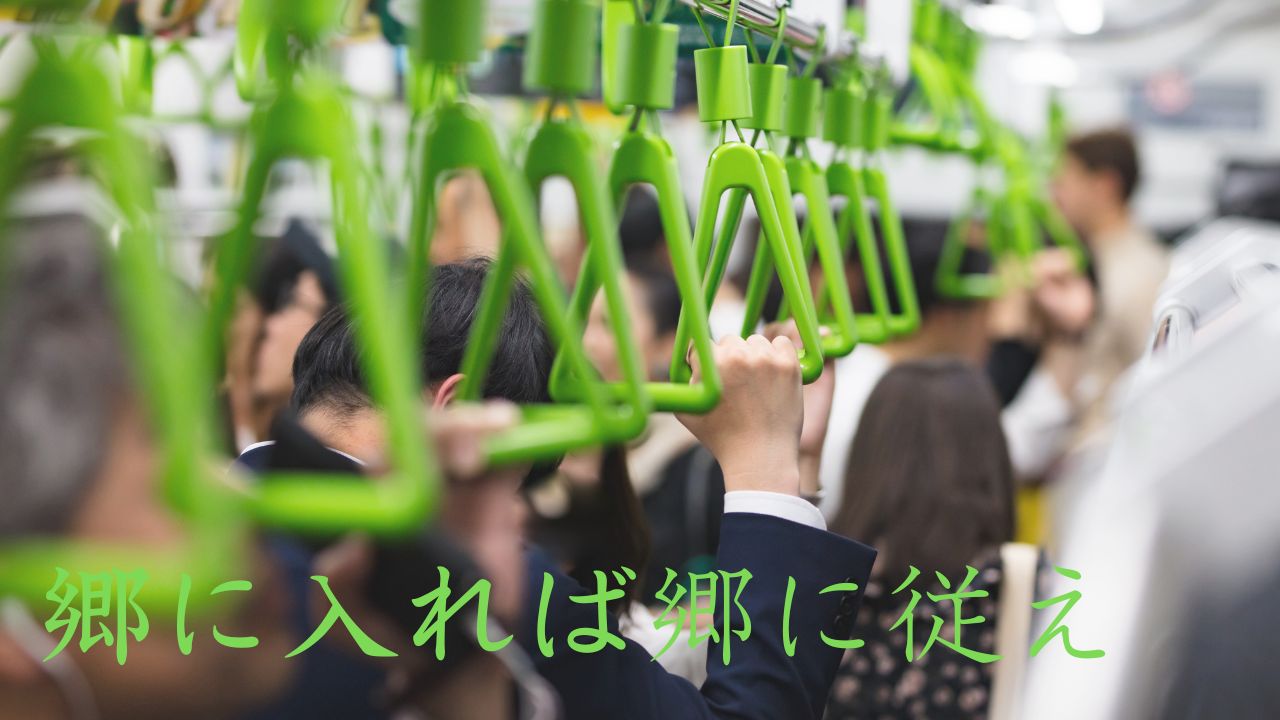
海外を旅行すると、「えっ、こんな習慣があるの?」と驚くことが多々ありますね。
例えば、トイレに入るのが有料だったり、
日本のように買い物をしても、袋に入れてくれなかったり、
お風呂には浸からずシャワーだけ、等々。
最初はとまどうかもしれませんが、その体験はその国の文化を知るきっかけにもなります。
日本でも同じです。訪れた外国人が「どうして家の中で靴を脱ぐの?」「なぜ電車の中はこんなに静か?」とカルチャーショックを感じることは少なくありません。
「郷に入れば郷に従え」という言葉があります。意味は、その土地に入ったら、その土地のしきたりや習慣に従いましょう、というものです。
In English, we say: “When in Rome, do as the Romans do.”
日本は地域ごとに代々、独自の文化やしきたりを受け継ぎ、長い歴史の中で、育んできた国です。靴を脱いで家に上がる習慣や、神社でのお参りの作法、公共の場で静かに過ごすマナーなどは、多くの日本人にとって自然な行動です。
日本社会は周囲と同じ行動をとることで争いを避け、集団の調和を守る「和」を大切にしてきました。
例えば、列に並ぶ習慣や、電車で静かにすることは「みんなで快適に過ごすための暗黙のルール」です。ルール、と私たちは感じているのではなく、そうすることで他の人は迷惑になる、不快感を与えることになるからです。自分ではなく、相手がどう思うかを考える。これが日本の、日本人の特徴の一つだと言えます。そして、そのような教育を受けてきています。
一方で、多くの国では「個人の自由」や「自己表現」を大切にします。公共の場で少し声が大きくても、「その人らしさ」として受け入れられることがあります。
日本の温泉でタトゥーがある人が入浴を断られることがありますが、海外ではタトゥーはファッションやアートとして一般的です。
これからの社会に必要なのは、日本人と外国人が互いに理解して歩み寄る姿勢です。日本人には「日本でダメなものはダメ、と説明する努力」、外国人には「よその国の考え方や文化を受け入れる柔軟な思考と行動」が求められます。
外国人が「ここではこのようにするんだ」と少し意識して、その国のしきたりや習慣や考え方を受け入れれば、より豊かな海外体験が得られます。
「郷に入れば郷に従え」は、一方的に規則に従わせるよう言葉ではありません。異文化を理解し合うための知恵でもあります。
大切なのは、互いの違いを認めて「学び」として受け止めること。郷に従うことと、互いを尊重すること。その両方を大切にしてこそ、本当の多文化共生が実現するのではないでしょうか。
When Japanese people travel abroad, we sometimes find ourselves thinking, “Wow, they really do this here?”
For example, we might be surprised that we have to pay to use the restroom, that stores don’t always provide shopping bags like in Japan, or that people usually take showers instead of soaking in a bath.
At first, these differences may feel strange, but they are also a chance to learn about another culture.
Japan is no different. Foreign visitors often wonder, “Why do I have to take off my shoes indoors?” or “Why is it so quiet on the train?”
That is why we say in English: “When in Rome, do as the Romans do.”
The Japanese proverb “Gō ni ireba gō ni shitagae” means “When you enter a village, follow the customs of that village.”
In other words, when you go somewhere new, it is wise to follow its rules and traditions.
Japan is a country where each region has passed down unique customs and traditions over generations, cultivating a rich culture over its long history.
Practices such as taking off your shoes before entering a house, following shrine rituals, and staying quiet in public are natural behaviors for most Japanese people.
However, for many visitors from overseas, these customs can be surprising or even confusing.
Japanese society has valued wa — harmony — for centuries.
By acting in ways that align with others, people have avoided conflict and preserved group harmony.
This is why Japanese people often think:
“Let’s act in a way that keeps harmony with others.”
For example, lining up in order or staying quiet on the train are seen as unspoken rules that help everyone stay comfortable.
To Japanese people, these are not strict “rules” but rather ways to avoid inconveniencing or upsetting others.
This focus on how one’s actions affect other people — rather than simply thinking of oneself — is one of the key features of Japanese culture, and it is something that is taught from a young age.
On the other hand, in many countries, personal freedom and self-expression are highly valued.
Speaking a little loudly in public may simply be seen as a part of someone’s personality.
So for many foreigners, following local customs feels optional rather than absolutely necessary.
In Japan, people with tattoos are sometimes refused entry to hot springs because tattoos have long been associated with criminal groups.
However, in many countries, tattoos are just fashion or art.
Foreigners may wonder: “Why is it not allowed here?”
In today’s world, what we need is an attitude of mutual understanding and compromise between Japanese people and foreigners.
For Japanese people, this means making the effort to explain why something is not allowed.
For foreigners, it means keeping an open mind and being willing to adapt to local customs.
For example, simply saying,
“Please take off your shoes before entering. It is to keep the house clean and sacred.”
makes it much easier for a visitor to understand. In addition to that it is also because Japanese people believe that the home is a place where the gods can rest. They keep it clean and try not to bring dirt or bad spirits from outside into the house.
Likewise, if a visitor thinks,
“This is how things are done here. Let me try,”
they will gain a deeper and richer experience of Japan.
The spirit of “When in Rome, do as the Romans do” is not about forcing people to obey.
The spirit is not to force, but to respect.
It is wisdom that allows us to better understand other cultures.
The key is to see differences not as inconveniences but as opportunities to learn.
When we combine respect for local customs with mutual understanding, we move one step closer to true multicultural coexistence.


コメント