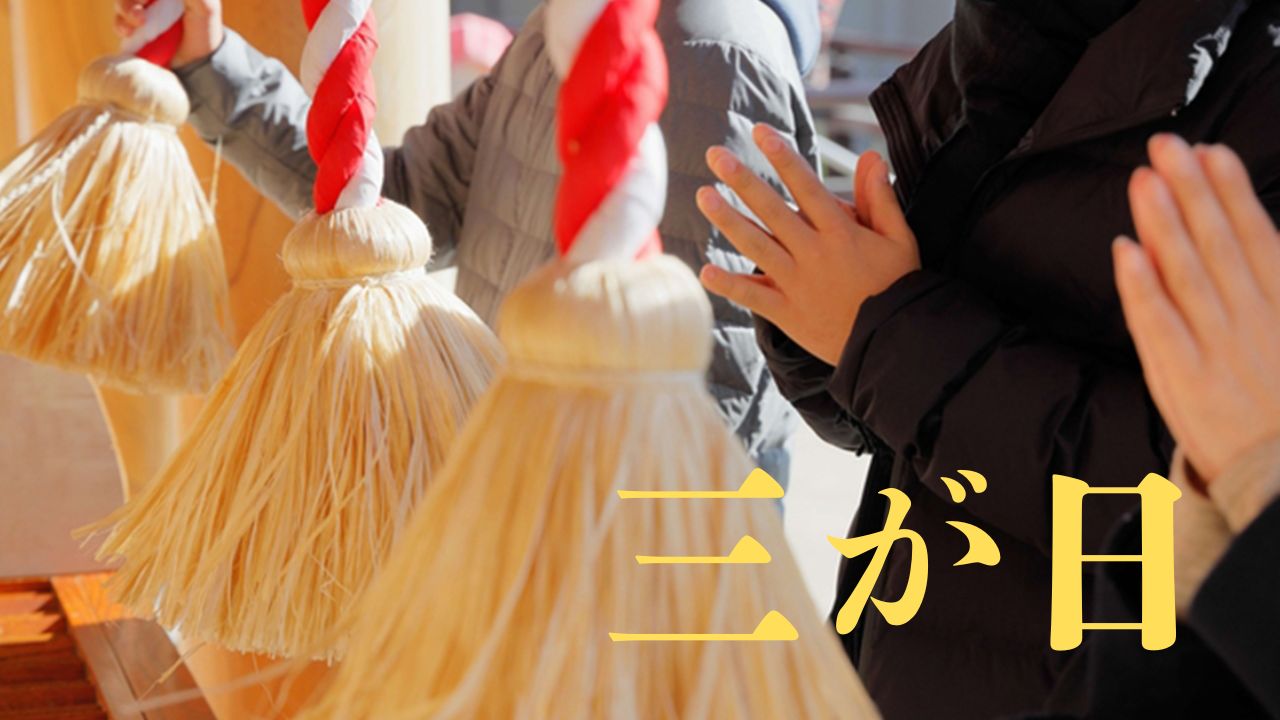
なぜ日本人にとって「1月3日」は特別なのか ― 三が日が終わるという、日本人の区切りの感覚 ―
1月3日。
日本では1月1日の元日を迎えてから、この1月3日までを
「三が日(さんがにち)」と呼び、特別な意味を持つ期間です。
この三日間は、新しい年の神様「年神様」が家に滞在すると考えられてきました。そのため、昔は仕事をせず、静かに、穏やかに過ごすことが大切だとされていました。
★ The first three days of the year are called “Sanganichi.”
(年の最初の3日間は「三が日」と呼ばれます)
「3」という数字も、日本では特別な意味を持ちます。
三本締め、三々九度、三種の神器。
日本文化では、「3」は区切りや完成を表す数字として使われてきました。
この三が日には、
初日の出を拝む、初詣に行く、おせちやお雑煮、お屠蘇で新年を家族とともに祝う、書初めなどをします。
三が日を終えて、普段の生活へと戻っていきます。
日本人は、始まりだけでなく、終わりもとても大切にします。
★ Japanese people value clear endings as much as new beginnings.
(日本人は、始まりと同じくらい終わりも大切にします)
1月3日はまだ、完全に日常に戻る日ではありません。
でも、いつまでもお正月ではいられない。
この「ゆっくり現実に戻す感覚」が、日本らしいところです。
海外では、「New Year’s Day is over. Let’s go back to work.」
と、はっきり切り替える国も多く、
海外ではNew Year Holidayは12月31日~1月1日が中心、
1日が終われば、お正月は終わり、という感覚が一般的なようです。
けれど日本では、
心の準備をしながら、少しずつ日常に戻っていきます。
1月1日が「新しく生まれ変わる日」だとしたら、
1月3日は「整えて、新たな一年、新しい年を踏み出す準備をする日」。
★ Taking time helps people start the year calmly.
(時間をかけることで、穏やかに一年を始められます)
そして1日に花火を上げて、盛大にみんなで祝うお正月に比べて
静かな夜に除夜の鐘をつき、年明けて初詣に粛々と人々が向かう
日本のお正月は厳かで静か。
日本人には自然でも、外国の人にはとても不思議なのだそうです。
このお正月に対する考え方、
外国ではイベント、またはパーティー
日本では儀式、と伝えたらわかりやすいのではないでしょうか。
★ In many countries, New Year is a party or event.
★ In Japan, it is a ritual to welcome and begin a new year.
(お正月は外国ではパーティー又はイベントですが、日本では新しい年を祝い、
始める儀式です)
なぜ3日までがお正月なのか。
なぜ一気に切り替えないのか。
なぜ「区切り」をこんなにも大切にするのか。
これらは、単語を英語に訳すだけでは伝わりません。
背景にある価値観や、日本人らしい感覚ごと説明する必要があります。
やまと英語講座では、
元日・初詣・三が日といった日本独自の文化を題材に、
英語が得意でなくても使える、やさしい英語で
「日本人の感覚をそのまま伝える練習」をしています。
英語を話せるようになることが目的ではなく、
日本人として、何を大切にしてきたのかを言葉にすること。
海外の人から
「I see. That’s very Japanese.」
と言われるような、
日本文化の伝え方を、一緒に身につけてみませんか。
Why Is January 3rd Special for Japanese People?
— The Japanese Sense of Ending the New Year —
January 3rd may seem like just another day to many people around the world.
But in Japan, it carries a quiet and meaningful significance.
From January 1st to January 3rd, the first three days of the year are called “Sanganichi.”
This period is considered a very special time in Japanese culture.
★ The first three days of the year are called “Sanganichi.”
(The first three days of the year are known as Sanganichi in Japan.)
Traditionally, Japanese people believed that Toshigami, the god of the New Year,visits homes during these three days.
Because of this, people were expected to rest, avoid work,and spend the time calmly and respectfully with their families.
The Meaning of “Three” in Japanese Culture
The number three itself has a special meaning in Japan.
We see it in many cultural expressions such as Sanbon-jime (three-clap closing),
San-san-kudo (a traditional wedding ritual),
and the Three Sacred Treasures of Japan.
In Japanese culture, “three” often represents completion, balance, and a clear unit.
That is one reason why Sanganichi ends on January 3rd.
During these days, people enjoy traditional New Year customs such as:
Watching the first sunrise of the year
Visiting shrines or temples for Hatsumode
Eating osechi and ozoni with family
Drinking otoso to celebrate the New Year
Doing kakizome, the first calligraphy of the year
January 3rd: Not the End, But a Gentle Transition
After January 3rd, Japanese people slowly return to daily life.
However, this day is not a sudden switch back to normal routines.
★ Japanese people value clear endings as much as new beginnings.
(Japanese people care deeply about both beginnings and endings.)
January 3rd is still part of the New Year mood,
but it also marks the moment when people begin preparing their hearts and minds to step back into everyday life.
Rather than changing all at once,Japanese culture prefers a gradual and thoughtful transition.
★ Taking time helps people start the year calmly.
(Taking time allows people to begin the year peacefully.)
A Quiet New Year Compared to Other Countries
In many countries, New Year’s celebrations focus on large events, fireworks,
and parties held on December 31st and January 1st.
Once New Year’s Day is over, people quickly return to work.
In contrast, Japan welcomes the New Year quietly.
People listen to temple bells, visit shrines in silence, and begin the year with calmness and reflection.
This difference often surprises visitors.
For many Japanese people, New Year is not just an event or a party —
it is a ritual.
★ In many countries, New Year is a party or event.
★ In Japan, it is a ritual to welcome and begin a new year.
Understanding the Japanese Sense of “Ending”
Why does the New Year end on January 3rd in Japan?
Why doesn’t it end suddenly on January 1st?
Why is “making a clear ending” so important?
These ideas cannot be fully explained by direct translation alone.
They require an understanding of Japanese values, emotions,
and the way people relate to time.
In Japanese culture,
ending something properly is what allows the next beginning to feel meaningful.
Learning to Explain Japanese Culture in English
At Yamato English,
we use topics such as New Year’s Day, Hatsumode, and Sanganichi
to help learners explain Japanese culture in simple, natural English.
The goal is not just to speak English fluently,
but to express what Japanese people truly value
in a way that feels authentic.
So that one day, when someone says,
“I see. That’s very Japanese.”
you can smile — knowing you were truly understood.
コメント