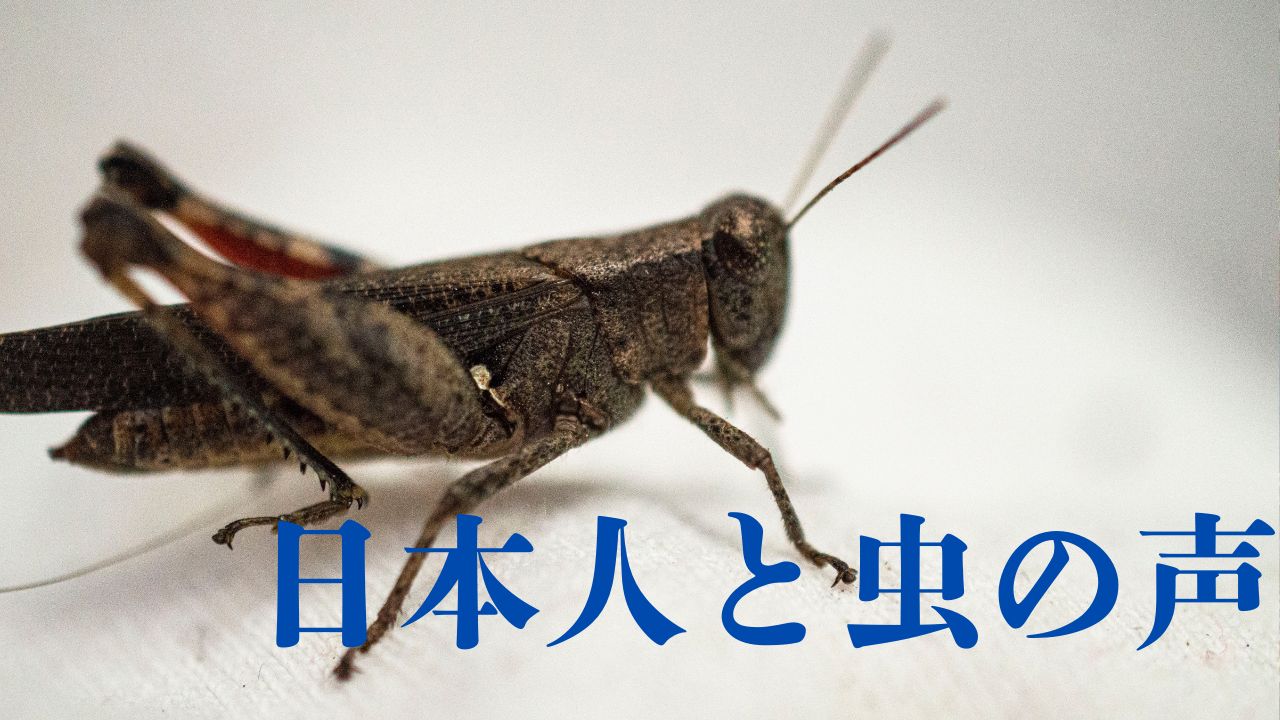
長くて暑かった今年の夏でしたけれども、
朝、晩と少しずつ涼しくなってきましたね。
コオロギや鈴虫、虫たちの声が聞こえてくると、私たち日本人は「あぁ、秋だな」とそこに秋の風情を感じます。
そしてその虫の音を、日本人は古くから楽しんできました。
“Japanese people enjoy listening to insects’ sounds, especially in autumn.”
(日本人は秋に虫の音を楽しみます)
俳句や和歌の世界では「虫の音」は秋の季語。
月明かりの夜、虫の声を聴きながら風を感じる――そうした情景は、日本文化の中で「侘び寂び」や「自然と共に生きる感覚」と深く結びついています。
日本人が虫の音を「音楽」として聞き取るのに対し、海外では「ただのノイズ、雑音」と感じていると言われています。
たとえば英語では「chirping(鳴き声)」や「noise」と表現されることが多く、日本人のように「心地よい」と感じる人はあまり多くありません。
“In many countries, insect sounds are considered noise, not music.”(多くの国では虫の音は音楽ではなく、雑音ととらえています)
この感覚の違いは、心理学や脳科学、言語学の研究でも注目されています。
日本語では虫の声を「音楽的に」処理する脳の働きがある一方、欧米人は「環境音」として聞き取る傾向があるそうです。つまり、日本人にとって虫の音は「聞くべき音」ですが、海外の人にとっては「ただの背景音」なのです。
理由のひとつは、日本の四季と深く結びついていること。
春はウグイス、夏はカエルやセミ、秋はスズムシにコオロギ。自然の音、リズムを耳から感じ取って、季節の移ろいを楽しんできたのです。
また、日本人の住環境も関係しています。
昔の家は木造で、窓や障子を開けて外の音を取り込む暮らしをしてきました。
夜、庭や野原から聞こえてくる虫の音は、自然とともに生きる日本人の暮らしの中で、季節を感じる音であり、心落ち着く音でもありました。
“Listening to insect sounds reminds Japanese people of the beauty of seasons.”
(虫の音を聞いて、日本人に四季の美しさを感じ取ります)
虫の音は、文学や音楽にも大きな影響を与えてきました。
『枕草子』や『源氏物語』には虫の音をめでる場面が平安時代から登場し、江戸時代には「虫の音を聞く会」も催されていました。
また、琴や尺八など和楽器の響きの中に、虫の声を思わせる余韻を込めたといわれています。
現代でも、虫の音はヒーリング音楽や環境音CDに取り入れられ、人々の心を癒すサウンドとして人気を集めています。
“In Japan, we think insect sounds are beautiful, like natural music.”
(日本では、虫の音を美しい自然の音楽のように感じます)
これに対して海外の人は何て言うのか、虫の声についてどう感じるのか?会話のキャッチボールができたら楽しいですね。
都会では虫の声を聞く機会が残念ながら減ってきましたが、それでも日本人はどこかで虫の音が聞こえてくると、その移り変わっていく季節感を感じ取って楽しみます。
虫の音を雑音ではなく、心を癒す音楽として楽しむ――。
それは日本人が自然と共に生きてきた歴史や文化の表れです。
たとえ小さな虫の声でも、その中に「季節」「自然」「命」を感じ取る。その感性は日本文化の豊かさであり、日本人にとってのギフトです。
After a long and hot summer, the mornings and evenings in Japan finally begin to feel cooler. Around this time, the gentle chirping of crickets and bell crickets fills the air. For Japanese people, these sounds are not just background noise — they signal the arrival of autumn and carry with them a deep sense of seasonal beauty.
“Japanese people enjoy listening to insects’ sounds, especially in autumn.”
In traditional Japanese poetry such as haiku and waka, the sounds of insects are treated as seasonal words (kigo) for autumn. A scene of listening to insects under the moonlight while feeling the cool evening breeze perfectly captures the Japanese aesthetics of wabi-sabi and the idea of living in harmony with nature.
Why Japanese Hear Music, Not Noise
One fascinating cultural difference is how insect sounds are perceived. Japanese people tend to hear them as music, while in many other countries, they are dismissed as simple noise. In English, for example, the word chirping or even noise is often used, without the sense of beauty that Japanese people attach to it.
“In many countries, insect sounds are considered noise, not music.”
Psychology and neuroscience research has explored this difference. Studies suggest that Japanese speakers process insect sounds in the brain more like “musical sounds,” while Western listeners process them as “environmental noise.” In short, Japanese people actively listen to insect sounds, while for many others, they are just background.
A Connection to the Seasons
One reason for this difference lies in Japan’s deep connection to the four seasons. Spring brings the warbling of bush warblers, summer the buzzing of cicadas and frogs, and autumn the chorus of crickets and bell crickets. These natural rhythms have long been a way for people in Japan to sense the changing of the seasons.
Traditional Japanese homes also played a role. Wooden houses with open windows and sliding screens (shoji) let the sounds of nature flow inside. At night, the soft chorus of insects from the garden or nearby fields became part of daily life — sounds that marked the passing of time and brought peace of mind.
“Listening to insect sounds reminds Japanese people of the beauty of seasons.”
Insects in Literature and Music
The appreciation of insect sounds runs deep in Japanese culture. As early as the Heian period, works like “The Pillow Book” and ”The Tale of Genji” describe people admiring the songs of insects. By the Edo period, “insect-listening gatherings” became popular. Traditional instruments such as the koto and shakuhachi were even said to capture the lingering echoes of insect voices.
Even today, insect sounds appear in healing music and environmental sound recordings, continuing to soothe and relax listeners.
“In Japan, we think insect sounds are beautiful, like natural music.”
A Cultural Conversation
When talking with people from abroad, it can be fun to ask: How do you hear insect sounds? Some may say they are distracting, others may admit they never paid attention to them. Such conversations reveal not only differences in hearing but also in cultural values.
Although in modern cities insect sounds are becoming harder to notice, Japanese people still pause when they hear them. Even a small chirp on a quiet night reminds us of the changing seasons.
To Japanese ears, insect sounds are not just noise but music that heals the heart. They reflect centuries of living close to nature and appreciating its smallest details. In every tiny chirp, Japanese people sense the season, the natural world, and the cycle of life.
This sensibility is more than cultural — it is a gift, one that continues to shape how Japanese people find beauty in the everyday.


コメント