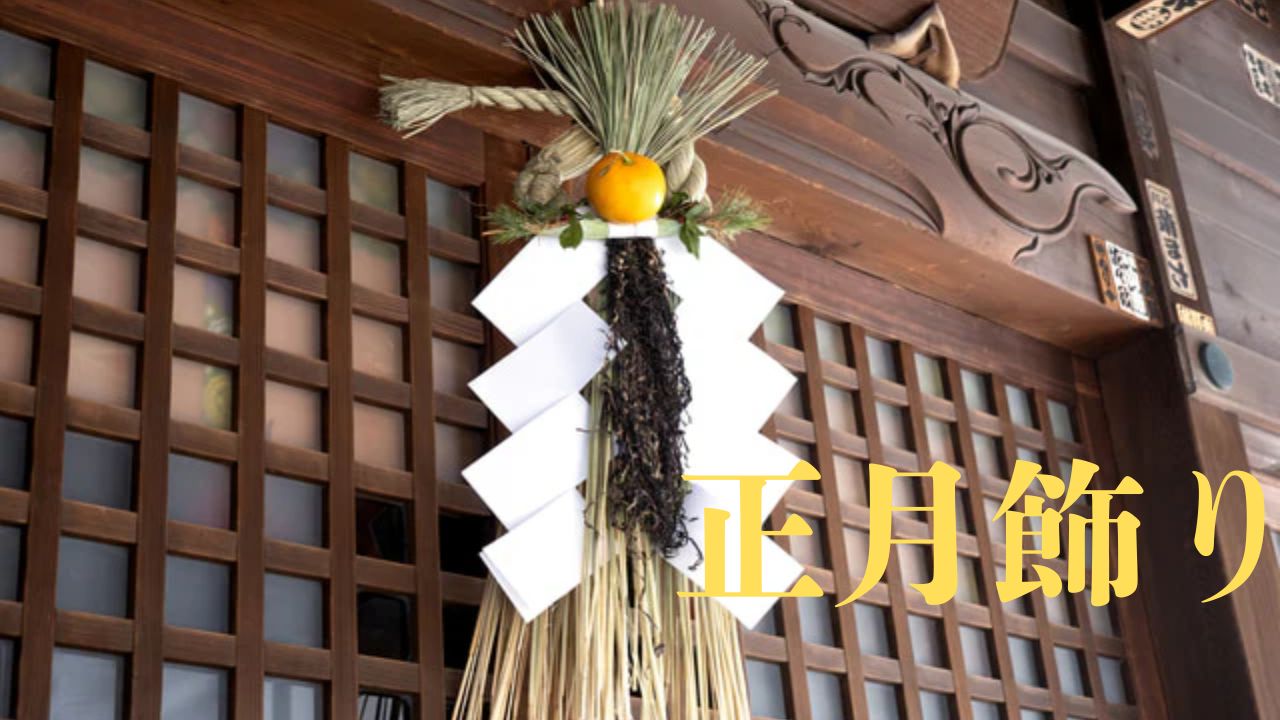
なぜ日本人は正月飾りを飾るのか ― 年神様を迎えるための大切な準備 ―
12月も半ばを過ぎると、日本では少しずつ「お正月の準備」が始まります。
その最初の節目とされているのが、12月13日の「正月事始め」です。
正月事始めは、新年を迎える準備を始める日。
昔からこの日を境に、煤払い(すすはらい)や大掃除、正月の支度を少しずつ進めてきました。
★ December 13th is called “Koto-hajime” in Japan.
(12月13日は日本で「正月事始め」と呼ばれます)
日本人にとってお正月は、ただの休日ではありません。
新しい年の神様である年神様を家に迎え入れる、特別な時間です。
家の中を清め、整えて
「新しい年の神様どうぞお入りください」という気持ちを形にする必要がありました。
正月飾りは、そのための“目印”であり“準備完了の合図”なのです。
★ New Year decorations are prepared to welcome the New Year’s god.
(正月飾りは年神様を迎えるために用意されます)
大掃除を終えた後、いよいよ正月飾りを飾る時期になります。
多くの家庭では、12月28日を選びます。
それにもちゃんとした理由があります。
数字の「八」は、日本では「末広がり」と呼ばれ、
これから先に向かって運が開けていく、とても縁起の良い数字とされています。
28日には、この「八」が含まれているため、
正月飾りをするのに特に良い日と考えられてきました。
★ The number eight is considered lucky in Japan.
(日本では「8」は縁起の良い数字とされています)
また、29日は「二重苦」を連想させるため避けられ、
31日は「一夜飾り」といって、準備不足と考えられてきました。
こうした考え方から、28日は気持ちにも、縁起にも、ちょうど良い日とされているのです。
正月飾りには、門松、しめ縄、鏡餅などがあります。
これらの飾りも神様が宿る場所を示し、
家が清められていることを伝える、大切な役割をそれぞれが持っています。
★ These decorations are not just for decoration.
(これらは、ただの飾りではありません)
正月飾りを飾るという行為には、
「新しい年を丁寧に迎えたい」
「家族が無事に一年を過ごせますように」
という日本人の静かな祈りが込められています。
忙しい現代でも、
多くの日本人が年末になると自然と正月準備を始めるのは、
こうした文化、伝統がご先祖様から受け継がれて心の奥に息づいているからなのかもしれません。
正月飾りは、
日本人が目に見えない存在を大切にし、
感謝と敬意をもって新年を迎える文化の象徴です。
クリスマスのデコレーションとはその役割が全く違って、知ると楽しいですね。
★ Japanese New Year is about respect, gratitude, and preparation.
(日本のお正月は、敬意・感謝・準備を大切にする文化です)
正月飾りのように、
日本には「意味を知らないと説明できない文化」が数多くあります。
やまと英語講座では、
年神様、正月事始め、縁起といった日本独自の考え方を、
やさしい英語で、背景ごと伝える練習をしています。
英語を話せるようになるだけでなく、
「日本人として何を大切にしてきたのか」を言葉にする講座です。
Why Do Japanese People Decorate for the New Year?
— Preparing to Welcome the New Year’s God —
From the middle of December, people in Japan slowly begin preparing for the New Year.
The first important milestone of this preparation is December 13th, known as “Koto-hajime.”
Koto-hajime marks the official start of New Year preparations.
Traditionally, from this day onward, people would begin cleaning soot from their homes, doing a thorough year-end cleaning, and preparing for the New Year little by little.
December 13th is called “Koto-hajime” in Japan.
For Japanese people, the New Year is not just a long holiday.
It is a special time to welcome Toshigami, the god of the New Year, into their homes.
Because of this belief, people clean and organize their living spaces and prepare their homes with care.
These actions express the feeling of saying,
“Please come into our home, New Year’s god.”
New Year decorations serve as a sign that the home is ready and prepared.
They show both humans and gods that everything is in order.
New Year decorations are prepared to welcome the New Year’s god.
After finishing the year-end cleaning, it is finally time to put up the New Year decorations.
Many households choose December 28th to do this, and there is a meaningful reason behind this choice.
In Japan, the number eight is considered very lucky.
It is associated with the idea of suehiro-gari, meaning “spreading outward,” which symbolizes growth and good fortune in the future.
Because the number eight is included in the 28th, this day has long been considered especially auspicious for decorating.
The number eight is considered lucky in Japan.
On the other hand, December 29th is often avoided because it can suggest “double hardship,”
and December 31st is called “ichiya-kazari,” or “one-night decoration,” which traditionally implies poor preparation.
For these cultural reasons, December 28th is seen as the perfect balance—
a day that feels right both emotionally and symbolically.
New Year decorations include items such as kadomatsu, shimenawa, and kagami-mochi.
These are not simply decorative objects.
Each one marks a sacred space where the god may dwell and signals that the home has been purified and prepared.
These decorations are not just for decoration.
The act of putting up New Year decorations carries a quiet but heartfelt prayer:
a wish to welcome the New Year with care,
and a hope that the family will live safely and peacefully throughout the coming year.
Even in today’s busy modern life, many Japanese people naturally begin New Year preparations as the year comes to an end.
This may be because these traditions have been passed down through generations and continue to live quietly in people’s hearts.
New Year decorations symbolize a Japanese cultural mindset—
respect for unseen beings, gratitude for the past year, and sincere preparation for what is to come.
Their role is completely different from Christmas decorations, and understanding this difference makes Japanese culture even more fascinating.
Japanese New Year is about respect, gratitude, and preparation.
Just like New Year decorations,
Japan has many cultural customs that are difficult to explain without understanding their deeper meaning.
In the Yamato Eigo Course,
we practice expressing uniquely Japanese ideas—such as Toshigami, Koto-hajime, and the concept of good fortune—
in simple, clear English with cultural background.
Rather than just learning how to speak English,
this course helps you put into words what Japanese people have valued for generations.
コメント