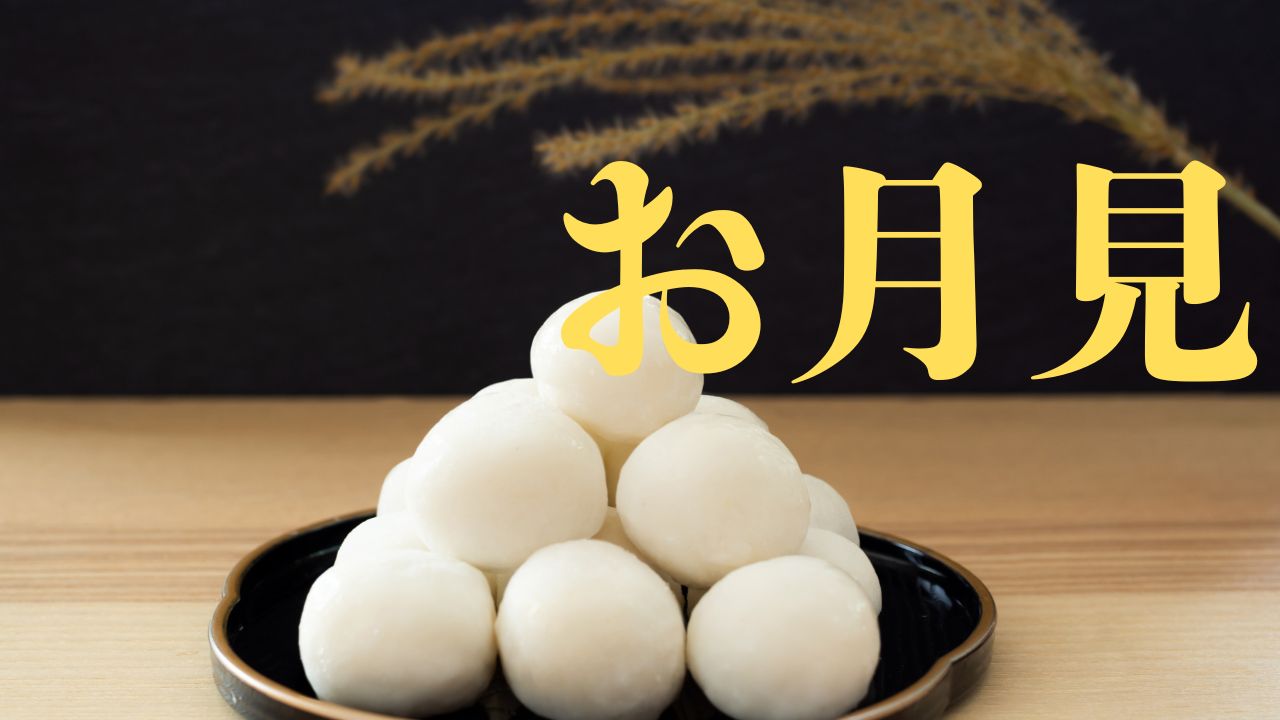
秋の夜空にまんまるなお月さまが浮かぶ「中秋の名月(ちゅうしゅうのめいげつ)」。
日本では古くから、この美しい月を眺めながら秋の実りに感謝する風習があります。
“The Harvest Moon in Japan is called the ‘Chūshū no Meigetsu.’ People admire the full moon and give thanks for the autumn harvest.”(日本では、中秋の名月と呼ばれる満月を眺め、秋の実りに感謝します。)
「中秋の名月」は、旧暦の8月15日にあたる日の夜に見える月のことを指します。
旧暦では、この時期がちょうど稲の収穫期にあたるため、月を見ながら豊作を祝う行事として親しまれてきました。
日本における、お月見の習慣は、平安時代(794~1185年)に中国から伝わったと言われています。
貴族たちは池に映る月を眺めながら詩を詠み、酒を酌み交わして優雅な夜を過ごしました。やがてこの文化が庶民にも広がり、「お月見」として定着していきました。
“The moon-viewing custom came from China during the Heian period and became part of Japanese culture.”
(月見の習慣は平安時代に中国から伝わり、日本の文化となりました。)
中秋の名月は、秋の済んだ空に浮かぶ美しい月を鑑賞するとともに「収穫祭」としての意味が込められています。
稲穂が実るこの季節、人々は自然の恵みに感謝し、神さまに豊作を祈るためにお供えをします。
代表的なのが「すすき」と「お団子」です。
すすきは、稲穂の代わりに神さまを招く“依り代(よりしろ)”とされ、お団子は満月をかたどったもの。
15個のお団子を三方(さんぽう)に飾り、月に向かって供えます。丸い団子は、その形から満月を表し、「十五夜」にちなんでお団子は15個とされているそうです。
“People offer pampas grass and rice dumplings to the moon as symbols of gratitude for nature’s blessings.”
(すすきやお団子をお供えし、自然の恵みに感謝を表します。)
お月見といえばお団子が有名ですが、実は地域によってさまざまな食べ物が楽しまれています。
たとえば、関西では「里芋」をお供えする風習があり、「芋名月(いもめいげつ)」とも呼ばれます。
また、秋の味覚である栗や枝豆、柿などをお供えする地域もあります。これらはすべて“秋の収穫物”として、自然への感謝の気持ちを表しています。
“People also eat taro, chestnuts, and seasonal fruits such as persimmons during the Harvest Moon.”(中秋の名月には、里芋、栗、柿など秋の味覚を食べることもあります。)
近年では、可愛らしい“うさぎのお団子”や、“月見バーガー”など、現代風の楽しみ方も人気です。
伝統を守りつつ、新しい形で季節を感じるのも日本らしい工夫ですね。
日本では、月を見上げると「うさぎが餅をついている」と言われます。
これは、古代インドの説話をもとにした仏教の伝承から広がったとされ、うさぎは“優しさと献身の象徴”です。
“Japanese people say there is a rabbit making rice cakes on the moon.”(日本では、月の中に餅をつくうさぎがいると言われます。)
この物語が広まったことで、お月見とうさぎは切っても切れない関係になりました。現代でも子どもたちは「月のうさぎ」を探しながら夜空を見上げます。
海外では「猫がチーズをかじる」と言うところもあるんです!面白いですね。
現在では、都会でも「お月見イベント」や「月見コンサート」が開かれるなど、伝統と現代が融合した形で楽しまれています。
団子やすすきだけでなく、秋の夜風にあたりながら月をゆっくり眺める時間そのものが、心を豊かにしてくれます。
“Even today, people in Japan enjoy moon-viewing with family and friends to feel peace and gratitude.”
(現代でも、日本では家族や友人と月を眺めながめるのは、心を穏やかにしてくれます)
『やまと英語』では、「日本や日本の文化を英語で紹介する」だけでなく、その文化背景にあって、英語に訳すことの難しい「和の心」、日本人なら知っておきたい「日本・日本人のこと」を英語で語れる英語のスピーカーを養成します。
The Harvest Moon in Japan – Otsukimi, a Night to Appreciate the Autumn Moon
When the bright full moon lights up the autumn sky, Japan celebrates “Chūshū no Meigetsu”, or the Harvest Moon Festival.
For centuries, Japanese people have admired the moon and expressed gratitude for the autumn harvest.
“The Harvest Moon in Japan is called the ‘Chūshū no Meigetsu.’ People admire the full moon and give thanks for the autumn harvest.”
Origins of Moon Viewing – From China to Japan
The custom of moon viewing (Otsukimi) came to Japan from China during the Heian period (794–1185).
In those days, aristocrats would gather beside ponds to admire the reflection of the moon, compose poems, and drink sake under the gentle autumn breeze.
Over time, this elegant pastime spread among common people and became one of Japan’s most beloved seasonal traditions.
“The moon-viewing custom came from China during the Heian period and became part of Japanese culture.”
Offerings to the Moon – Pampas Grass and Rice Dumplings
The Harvest Moon is not only for admiring the beauty of the moon but also for showing gratitude to nature.
People offer pampas grass (susuki) and rice dumplings (tsukimi dango) to the moon as symbols of a good harvest.
Pampas grass is believed to invite the gods and protect homes from evil spirits, while the round dumplings represent the full moon.
Traditionally, 15 dumplings are displayed on a wooden stand called sanpo, symbolizing the “Fifteenth Night” of the lunar calendar.
“People offer pampas grass and rice dumplings to the moon as symbols of gratitude for nature’s blessings.”
Regional Foods of the Harvest Moon
While rice dumplings are the most famous offering, different regions in Japan have their own local moon-viewing foods.
In the Kansai area, people offer taro (satoimo), calling the night the “Imo Meigetsu,” or “Taro Moon.”
In other regions, people offer chestnuts, edamame, or persimmons, all representing the gifts of autumn.
“People also eat taro, chestnuts, and seasonal fruits such as persimmons during the Harvest Moon.”
These foods remind people to appreciate nature’s blessings and the changing seasons.
The Rabbit on the Moon – A Symbol of Kindness
In Japan, people often say they can see a rabbit making rice cakes (mochi) on the moon.
This idea comes from an ancient Buddhist story that originated in India, where the rabbit symbolizes kindness and self-sacrifice.
“Japanese people say there is a rabbit making rice cakes on the moon.”
Because of this legend, the moon and the rabbit are closely connected in Japanese culture.
Children still love to look up at the night sky and try to find the “moon rabbit” — a charming part of Japan’s autumn traditions.
Interestingly, in some Western countries, people say they see a cat nibbling on cheese instead!
Otsukimi Today – Tradition Meets Modern Life
In modern Japan, Otsukimi has evolved in creative ways.
You can find rabbit-shaped dumplings, moon-viewing burgers, and even moonlight concerts held in cities.
While the customs have changed, the spirit of peace, gratitude, and appreciation for nature remains the same.
“Even today, people in Japan enjoy moon-viewing with family and friends to feel peace and gratitude.”
Whether in the countryside or the heart of Tokyo, taking a moment to gaze at the moon under the cool autumn sky connects people to Japan’s timeless appreciation of nature
#HarvestMoon #Otsukimi #JapaneseCulture #MoonViewing #AutumnTradition
#中秋の名月 #お月見 #秋の風物詩 #月を愛でる心 #日本文化

コメント