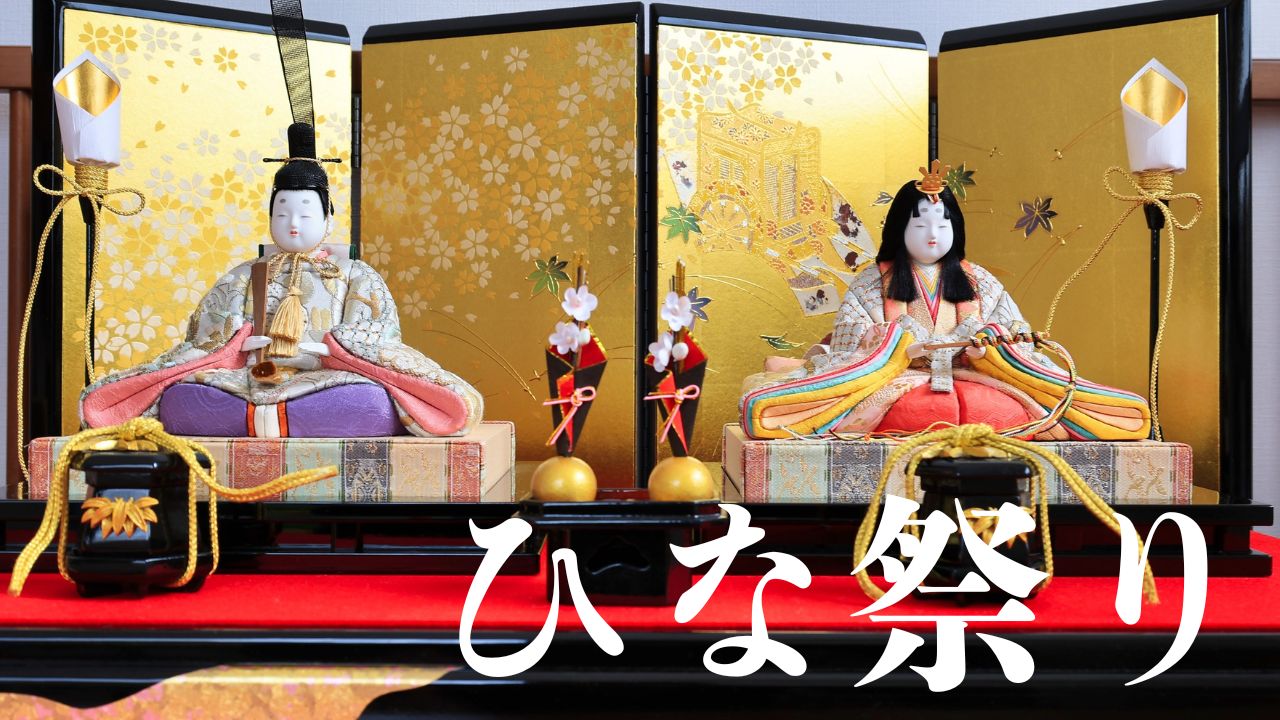
3月3日は「桃の節句」、ひな祭りです。
1月1日に新しい年が始まって、日本には一年に五つの節句があります。
1月7日人日の節句(じんじつ)別名、七草の節句。
その次に来る2番目の節句が上巳の節句(じょうし)の節句、別名桃の節句のひな祭りです。
旧暦ではまさにこれからが桃の季節。この行事には、私たちが忘れかけている「自然との調和」や「祈りのカタチ」が凝縮されています。
今回はひな祭りの由来と、そこに込められた数字や色の意味について紹介します。
ひな祭りの起源は、平安時代までさかのぼります。もともとは「人形(ひとがた)」と呼ばれる紙の形代(かたしろ)で自分の体を撫で、自分の穢れ(けがれ)を移して川に流す「流し雛」という儀式でした。
現代のように豪華な雛人形を飾るようになったのは江戸時代からですが、その根底にあるのは「自分の身代わりとなって厄を受けてもらう」という、極めて精神的な身を浄める儀式(Purification ritual)だったのです。
●English Point!
「身代わり」は英語で “substitute” や “scapegoat” と言いますが、お雛様のような文脈では “spiritual protector” と表現すると、より「自分を守ってくれる」ポジティブなニュアンスが伝わります。
Historically, Hina dolls served as spiritual protectors, taking away one’s misfortunes.
歴史的に、雛人形は「精神的な守護者」としての役割を果たし、その人の不運(厄)を身代わりとして引き受けてきました。
なぜ「桃」なのでしょう? 古代から続く「生命力」の象徴
ひな祭りは別名「桃の節句」と呼ばれます。桜や梅ではなく、なぜ「桃」なのでしょうか?
それは、古代中国の神話において桃が「不老長寿」や「強力な魔除け」の象徴だったからです。日本最古の歴史書『古事記』でも、イザナギノミコトが黄泉の国から逃げ帰る際、追っ手を振り払うために桃を投げつけた話しがあります。
桃は単なる美しい春の花ではなく、「邪気を跳ね返す強い生命力」の象徴なのです。
●English Point!
「不老長寿」は英語で “eternal youth and longevity” と言います。
Peaches have been revered as symbols of eternal youth and longevity.
桃は古くから、「不老長寿」の象徴として崇められてきました。
「3」と「5」の数字に込められた「陽」の逆転
日本の五節句(1/7, 3/3, 5/5, 7/7, 9/9)は、すべて奇数が重なる日です。
東洋の陰陽思想では、奇数は「陽(ポジティブなエネルギー)」、偶数は「陰」とされます。一見、陽が重なるのはおめでたいことのように思えますが、実は「陽が極まれば陰に転じる(物事は絶頂に達すると崩れ始める)」という警戒すべき日でもありました。
だからこそ、その転換点(Turning point)に季節の植物を使い、お供え物をして、心身を整える必要があったのです。「お祝い」の裏側には、常に「謙虚な祈り」があったことが分かります。
English Point!
●「陰と陽」は英語でもそのまま “Yin and Yang” で通じます。
In the philosophy of Yin and Yang, the doubling of odd numbers is seen as a powerful yet unstable moment.
陰陽思想において、奇数が重なることは、エネルギーが非常に強い一方で、不安定な瞬間であるとも見なされています。
ひし餅の「3色」にもそれぞれ意味が込められています。
あの菱形の形と色には、厳しい冬から春へと移る季節が描かれています。
ピンク(赤): 魔除け、春に咲く「桃の花」
白: 清浄であり、地面に残る「残り雪」
緑: 健康、雪の下から顔を出す「新芽(ヨモギ)」
この3色を重ねることで、「雪の下から新芽が吹き出し、その上に桃の花が咲き誇る」という、日本の春の情景(Landscape)そのものを表現しているのです。ひし形という形も、心臓や大地の生命力を表すと言われています。
●English Point!
The layers of Hishimochi depict a beautiful story: fresh green buds emerging from under the white snow, with pink blossoms blooming above.
ひし餅の色の重なりは、一つの美しい物語を描いています。それは、「白い雪の下から緑の新芽が顔を出し、その上でピンクの桃の花が咲き誇る」という情景です。
ひな祭りを英語で紹介する時、Peach festivalとかGirl’s festivalと訳されることが多いですね。
「祭り」なのでfestivalとしたくなるところですが、festivalは海外では賑やかな行事やパーティー。
こうしてひな祭りの起源や、お雛様であったり色に込められているものがわかると、海外のfestivalとは別物であることがわかりますね。
グローバル化が進む今、私たちが英語で語るべきは、ただ英語に当てはまる言葉で置き換えて紹介するのではなくて、その行事の裏にある「目に見えないもの(祈りや季節感)を大切にする心」であって、海外の人たちもきっとそんな「本当の日本」を知りたいのではないでしょうか?
こうした海外にはない、日本独自の価値観(Japanese identity)を自分の言葉で語るグローバル・コミュニケーションが、これからはもっと求められるのだと思います。
Beyond “Girl’s Festival”: The Spiritual Roots and Prayer of Hinamatsuri
Hinamatsuri, celebrated on March 3rd, is a time-honored tradition in Japan. While the new year begins on January 1st, Japan observes five major seasonal festivals known as “Go-sekku.”
The first is Jinjitsu on January 7th (the Festival of Seven Herbs). The second is Joshi, more commonly known as Momo-no-Sekku or Hinamatsuri. According to the lunar calendar, this is the season when peach blossoms truly begin to bloom. This tradition encapsulates a “harmony with nature” and “forms of prayer” that we often tend to forget in our modern lives.
In this article, I would like to introduce the origins of Hinamatsuri and the deep meanings hidden within its numbers and colors.
The Origin: A Ritual of Purification
The roots of Hinamatsuri date back to the Heian period (794–1185). Originally, it was a ceremony called Nagashi-bina. People would rub their bodies with paper dolls called Hitogata to transfer their impurities (Kegare) onto the dolls and then float them down the river.
While the custom of displaying ornate Hina dolls as we see today began in the Edo period, the underlying essence remains a deeply spiritual purification ritual—offering the dolls as a “spiritual protector” to take away one’s misfortunes.
English Point!
While words like “substitute” or “scapegoat” can describe a proxy, in the context of Hina dolls, using “spiritual protector” conveys a more positive nuance of something that watches over and protects you.
Historically, Hina dolls served as spiritual protectors, taking away one’s misfortunes.
Why Peaches? A Symbol of Vitality
Why is this festival associated with peaches rather than cherry blossoms or plum blossoms? In ancient Chinese mythology, peaches were revered as symbols of “eternal youth and longevity” and powerful talismans against evil.
Even in Japan’s oldest historical record, the Kojiki, there is a story where the deity Izanagi-no-Mikoto threw peaches to repel pursuers from the underworld. Thus, the peach is not just a beautiful spring flower; it is a symbol of strong vitality that fends off negativity.
English Point!
“Fuyou-Chouju” (不老長寿) is translated as “eternal youth and longevity.”
Peaches have been revered as symbols of eternal youth and longevity.
The Mystery of Numbers: The Reversal of “Yang”
The five seasonal festivals of Japan (1/7, 3/3, 5/5, 7/7, 9/9) all fall on days where odd numbers overlap. In the Eastern philosophy of Yin and Yang, odd numbers represent “Yang” (positive energy), while even numbers represent “Yin.”
While an overlap of Yang might seem auspicious, it was traditionally viewed as a day to be cautious, based on the idea that “when Yang reaches its peak, it turns into Yin” (everything begins to decline once it reaches its zenith). Therefore, on these turning points, people used seasonal plants and offerings to realign their minds and bodies. Behind the “celebration” lies a heart of “humble prayer.”
English Point!
“Yin and Yang” is a widely understood term globally.
In the philosophy of Yin and Yang, the doubling of odd numbers is seen as a powerful yet unstable moment.
The Three Colors of Hishimochi: A Landscape of Spring
The diamond-shaped rice cakes, Hishimochi, also hold significant meaning. Their colors depict the transition from the harsh winter to the arrival of spring.
Pink (Red): To ward off evil; represents the peach blossoms of spring.
White: Purity; represents the lingering snow on the ground.
Green: Health; represents the fresh green buds (mugwort) peeking through the snow.
By layering these three colors, the Hishimochi expresses the very landscape of a Japanese spring: “fresh green buds emerging from under the white snow, with pink blossoms blooming above.” The diamond shape itself is said to represent the vitality of the heart or the earth.
English Point!
The layers of Hishimochi depict a beautiful story: fresh green buds emerging from under the white snow, with pink blossoms blooming above.
Sharing the “True Japan” Through Your Own Words
When introducing Hinamatsuri in English, it is often translated as “Peach Festival” or “Girl’s Festival.” Since the word “festival” often brings to mind lively parties or parades in other cultures, it can be quite different from the true essence of Hinamatsuri once you understand its origins and the prayers embedded in its colors.
In this era of globalization, what we should communicate in English is not just a simple word-for-word replacement. It is the “spirit of cherishing the invisible”—the prayers and the deep sense of the seasons. I believe people around the world are eager to discover this “authentic Japan.”
I am convinced that this type of global communication—where you speak of Japanese identity in your own words—is what will be truly valued moving forward.
#やまと英語
#ひな祭り
#日本文化
#大人お学び直し
#伝統行事
#Hinamatsuri
#JapaneseCulture
#SpiritualJapan
#JapaneseSpirit
#LearnJapaneseCulture
コメント