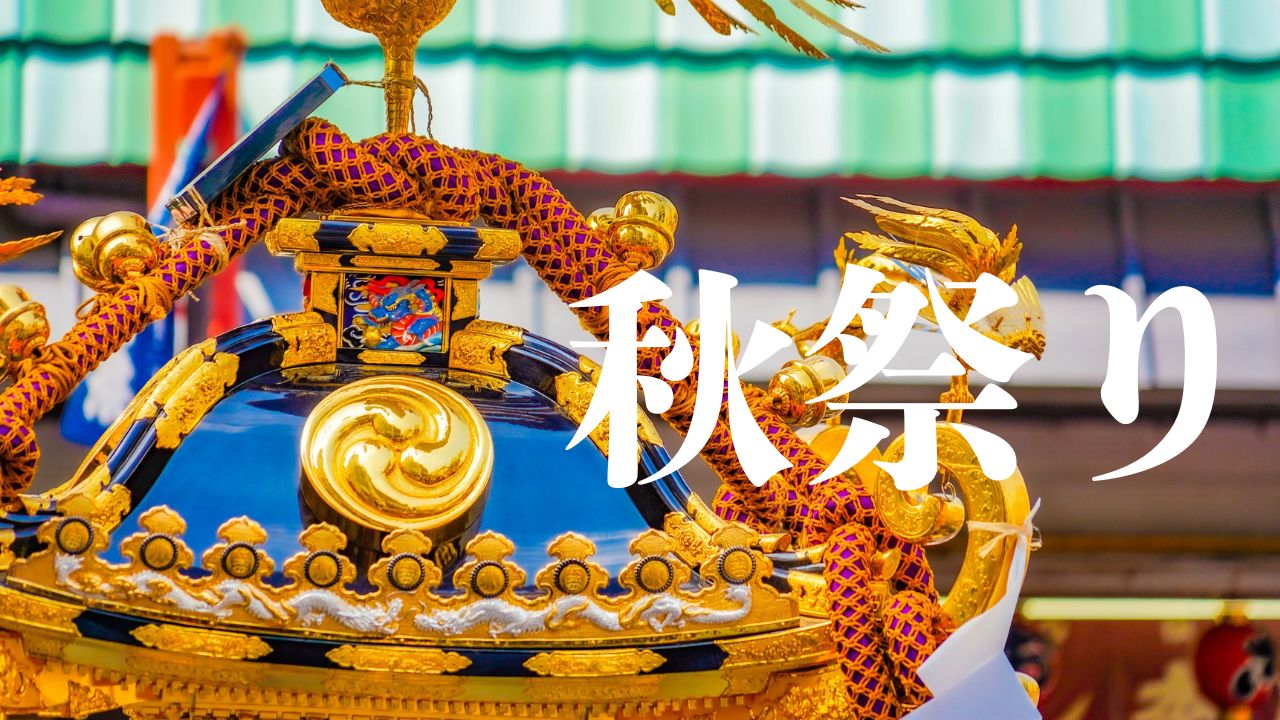
秋祭り ― 収穫を祝い、感謝を伝える日本の伝統行事
秋分の日前後から、日本ではあちこちで「秋祭り(あきまつり)」が行われます。
町内や村のお神輿を地域の人たちが担いで、生きのいいかけ声を出しながら廻り、神社の境内では、にぎやかな太鼓の音が響いて提灯が灯り、屋台が立ち並びます。
秋祭りは、「豊かな実りに感謝し、来年の五穀豊穣(ごこくほうじょう)を祈る」ために行われる、古くからの伝統行事です。
秋祭りのルーツは、古代日本の稲作文化にあると言われています。
稲の収穫が終わると、村人たちはその年の実りを神様に感謝し、祭りを行いました。
このときに祀られる神様は、「稲の神」や「田の神」と呼ばれ、日本人の生活に深く結びついています。
In autumn, people in Japan hold festivals to thank the gods for a good harvest.(日本では秋になると、豊かな実りを神様に感謝するお祭りが開かれます。)
神社では「新穀(しんこく)」と呼ばれる、収穫したばかりのお米をお供えします。そして、人々は五穀豊穣を祈り、神様と共に喜びを分かち合います。
この「神人共楽(しんじんきょうらく)」という考えが、日本の祭りの根底にあります。
多くの人は、この「夏祭り」と「秋祭り」の違いについて考えてみたことがないのでは
ないでしょうか?
夏祭りは「疫病や災いを防ぐ」ために行われる祈りの祭りであるのに対し、秋祭りは「実りに感謝する」祭りです。
つまり、夏は「お願い」、秋は「お礼」の季節なのです。
Summer festivals are for praying. Autumn festivals are for giving thanks.(夏祭りは祈りのため、秋祭りは感謝のために行われます。)
この違いを知ると、日本人の自然に対する考え方がよりよく見えてきます。日本人は自然を「支配するもの」ではなく、「共に生き、感謝すべき存在」として受け止めているのです。
秋祭りでは、地域によってさまざまな行事が行われます。
代表的なのが「神輿(みこし)」です。神様の霊を一時的に宿した神輿を担ぎ、町を練り歩きます。これは、神様が人々のもとに降りてこられることを意味します。
People carry a “mikoshi,” a portable shrine, to let the gods visit the town.(神輿を担いで町を歩くのは、神様をお迎えするためです。)
太鼓や笛の音が響く中、縁日で綿あめやおもちゃをお小遣いで買うのも、子どもたちにとってはお楽しみ。
この家族で、地域で人が集まる。この人神さまを中心とした人との繋がりを日本人は長い歴史の中で大事にしてきました。
秋祭りでは、「旬の食材」も大きな楽しみの一つです。
焼き栗、さつまいも、きのこご飯、そして新米。
自然の恵みを味わうことも、感謝の表現のひとつです。
Autumn festivals are full of delicious seasonal foods.
(秋祭りでは、旬の食べ物を楽しむことができます。)
日本人にとって「食べること」はただお腹を満たす栄養補給ではなく、「神さま、自然とつながる行為」でもあります。秋祭りは、そうした自然との調和を実感できる大切な時間なのです。
現代では、秋祭りは地域のコミュニティをつなぐ大切なイベントとして受け継がれています。
都市化が進んでも、地元の人たちは協力して準備をし、子どもたちに伝統を教えます。
こうした中に、日本人の「感謝の心」と「つながりを大切にする文化」のベースがあります。
Autumn festivals show the Japanese spirit of gratitude and harmony with nature.
(秋祭りは、日本人の感謝と自然との調和の心を表しています。)
秋祭りを楽しみながら、この神さま、自然への感謝と自然との調和を感じてみてくだい。
Why Autumn Festivals in Japan Are More Than Just a Celebration?
Around the time of the Autumn Equinox, festivals called Aki Matsuri are held all over Japan.
In local towns and villages, people carry portable shrines called mikoshi through the streets, shouting rhythmic chants.
At the shrine grounds, the sound of drums fills the air, lanterns light up the evening, and food stalls line the paths.
The Autumn Festival is a traditional event to celebrate the harvest and give thanks to the gods for a bountiful year.
It also serves as a prayer for next year’s good harvest — a beautiful blend of gratitude and hope that reflects the Japanese way of life.
Origins of The Autumn Festival
The roots of Japan’s autumn festivals go back to ancient rice-farming culture.
After the rice harvest, villagers held ceremonies to express their gratitude to the gods.
The deities worshiped at these events were known as the “God of Rice” (Ine no Kami) or the “God of the Fields” (Ta no Kami), who were deeply connected to people’s daily lives.
In autumn, people in Japan hold festivals to thank the gods for a good harvest.
At Shinto shrines, freshly harvested rice—called “shinkoku” (new grains)—is offered to the gods.
People pray for abundance and share joy together with the divine.
This harmony between gods and people is known as “Shinjin Kyōraku” (神人共楽), a concept that lies at the heart of Japanese festivals.
Many people may not realize the difference between summer and autumn festivals.
While summer festivals are prayers to drive away disease and disaster, autumn festivals are celebrations of gratitude for the harvest.
Summer festivals are for praying. Autumn festivals are for giving thanks.
In other words, summer is the season of “asking,” and autumn is the season of “thanking.”
This difference reveals something essential about the Japanese view of nature — not as something to control, but as something to live with and appreciate.
Nature is seen as a partner, not an enemy.
What Happens During an Autumn Festival
Autumn festivals vary from region to region, but one of the most iconic elements is the mikoshi.
The mikoshi is a portable shrine that temporarily houses the spirit of a deity.
People carry it through the streets so that the gods can visit their town and bless it.
People carry a “mikoshi,” a portable shrine, to let the gods visit the town.
The lively rhythm of drums and flutes fills the air, while children enjoy cotton candy and small toys from the stalls.
It’s a time when families and communities gather — a living tradition that keeps people connected to each other and to their gods.
Taste of the Season – Autumn Foods
Food is another big part of the celebration.
You’ll find roasted chestnuts, sweet potatoes, mushroom rice, and, of course, fresh new rice.
These are all symbols of nature’s blessings and part of expressing gratitude.
Autumn festivals are full of delicious seasonal foods.
For Japanese people, eating is not only about nourishment — it’s a spiritual act that connects them with nature and the divine.
Sharing food during the festival is a way to feel harmony with the world around us.
Autumn Festivals in Modern Japan
Even today, autumn festivals continue to bring communities together.
Despite urbanization, local residents still work together to prepare for the event and teach younger generations about their traditions.
Through these efforts, the spirit of gratitude and the importance of human connection remain strong in Japanese culture.
Autumn festivals show the Japanese spirit of gratitude and harmony with nature.
They are not just about entertainment; they represent a deep respect for the cycles of nature and for the unseen powers that sustain life.
A Celebration of Gratitude and Connection
Autumn festivals in Japan are filled with joy, music, food, and color — but beyond that, they are a celebration of the heart.They remind us to give thanks to the gods, to nature, and to one another.
If you visit Japan in autumn, join a local festival and feel the spirit of gratitude.
You’ll not only enjoy the festive atmosphere but also discover a deeper layer of Japan’s culture — the harmony between humans, nature, and the divine.
#秋祭り #日本文化 #伝統行事 #収穫祭 #五穀豊穣#AutumnFestival #JapaneseCulture #HarvestFestival #TraditionalJapan #SpiritOfGratitude


コメント